A No Brain the Same Activity: What Makes You, YOU?
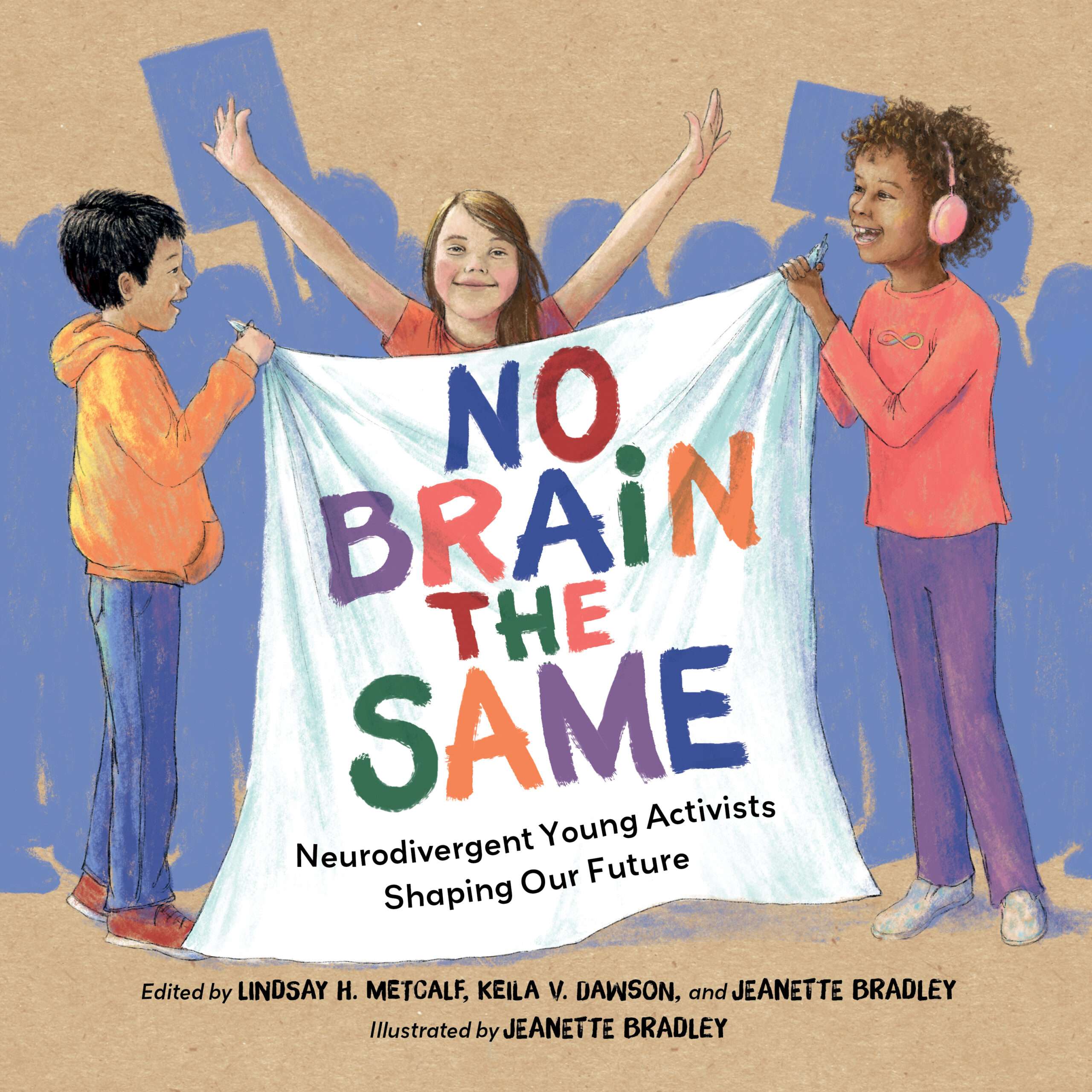
In my post, Celebrate All Kinds of Minds in Your Classroom, on Beth Anderson’s blog, students identify how the youth in No Brain the Same use their Multiple Intelligences. In this extension activity, students use Gardner’s Multiple Intelligences to discover all the smart ways they use their own brains. They will design profile silhouettes filled with words and pictures to help them answer the question, What smart ways does your brain work?
I. Introduce the students to Gardner’s Theory of Multiple Intelligences by explaining the eight intelligences (Visual-Spatial, Linguistic, Logical-Mathematical, Bodily-Kinesthetic, Musical, Interpersonal, Intrapersonal, and Naturalistic) to students or show them the video Every Type of Intelligence Explained in 5 Minutes, a YouTube video.
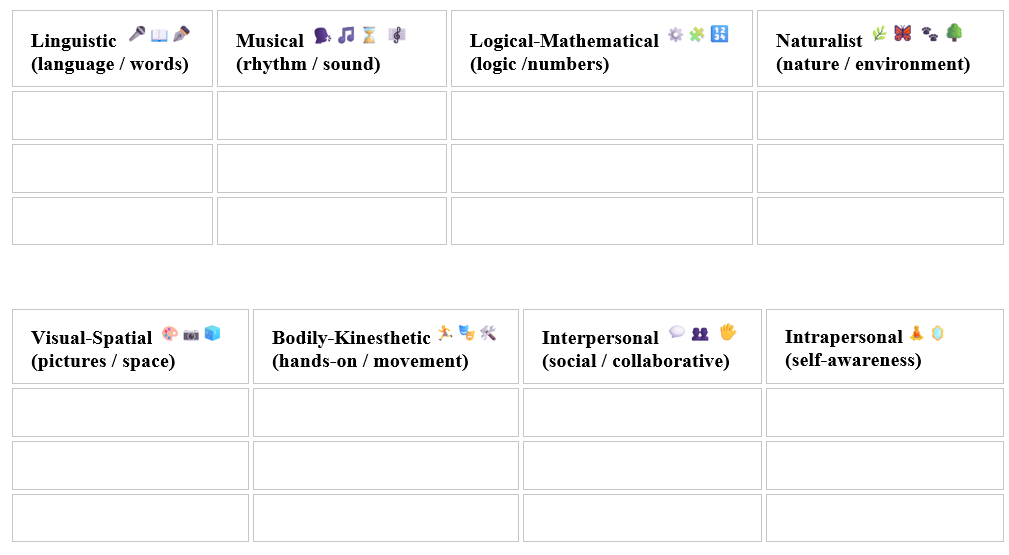
II. Create an eight-column chart on a whiteboard or chart paper, labeling each column with one of Gardner’s Multiple Intelligences. Leave room under each heading for student responses.
III. Engage students in a discussion about things they do to overcome learning obstacles. Have students write their answers on sticky notes or small pieces of paper. Ask them, “Think back to times when you got stuck learning something but figured it out. What did you do to get unstuck?”
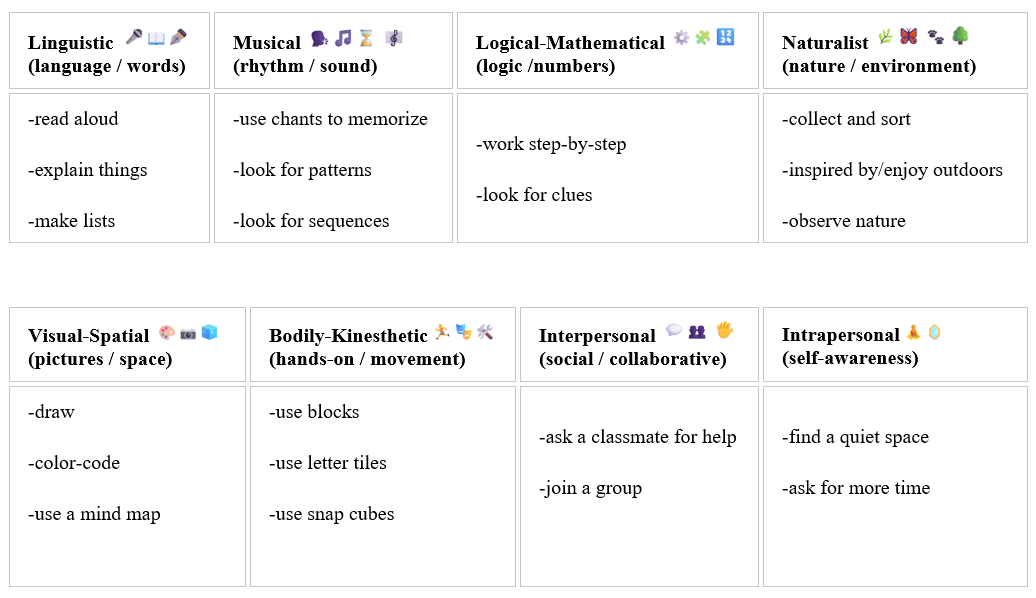
Examples may include:
- draw or look for graphs or pictures
- use manipulatives like blocks, tiles
- ask a classmate for help
- look for quiet, ask for more time
- work step-by-step
- look for clues to make predictions
- read aloud
- observe nature
- color code text
- look for patterns or sequences
- make lists
- collect and sort
IV. Guide students in thinking about which of the Multiple Intelligences categories best describe each of their personal experiences. Instruct them to record their answers and reasoning in the chart. Explain that some actions or activities engage more than one category, but have them choose the primary intelligence.
For example:
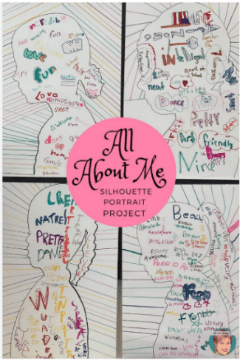
IV. Have each student draw a profile silhouette. Jenny K has tips on how-to outline one.
a. Tape a piece of 12 x18 light-colored paper to the wall at the student’s eye level.
b. Have each student sit in a chair with the side of their head right next to the paper.
c. Shine a flashlight or projector at the student’s profile from about 3 to 4 feet away to create a sharp shadow on the paper. Trace the outline.
V. Design the profile silhouettes.
a) Ask students to refer to the Multiple Intelligences chart to help them answer the question, “What smart ways does your brain work to make you, YOU?”
b) And have them fill in their silhouettes with words and pictures to show their unique strengths, including interests and activities they enjoy both inside and outside of school.
c) Ask students to make a pledge:
Next time I get stuck ______________, I will _______________.
I hope designing their own profile silhouettes helps kids discover all the smart ways they use their brains! I’d love to see some profile silhouettes. Please reach out to me via my website, or tag me on Facebook, Instagram, or Bluesky if you share their work!
Recommended reading:
Multiple Intelligences Theory: Widely Used, Yet Misunderstood by Youki Terada (Edutopia)
Multiple Intelligence Theory and Growth Mindset by Laura Candler
Check out the No Brain the Same book page for more content.
Edited by Lindsay H. Metcalf, Keila V. Dawson, and Jeanette Bradley;
Illustrated by Jeanette Bradley
Charlesbridge | ISBN: 978-1-62354-583-3
Purchase wherever books are sold!
Amazon | Barnes & Noble | Books A Million | Bookshop.org | Hudson Booksellers Powell’s | Target | Walmart