Teaching Tips

Nonfiction, Picture books, Teaching Tips

A No Brain the Same Activity: What Makes You, YOU?

In my post, Celebrate All Kinds of Minds in Your Classroom, on Beth Anderson’s blog, students identify how the youth in No Brain the Same use their Multiple Intelligences. In this extension activity, students use Gardner’s Multiple Intelligences to discover all the smart ways they use their own brains. They will design profile silhouettes filled with words and pictures to help them answer the question, What smart ways does your brain work?

I. Introduce the students to Gardner’s Theory of Multiple Intelligences by explaining the eight intelligences (Visual-Spatial, Linguistic, Logical-Mathematical, Bodily-Kinesthetic, Musical, Interpersonal, Intrapersonal, and Naturalistic) to students or show them the video Every Type of Intelligence Explained in 5 Minutes, a YouTube video.

II. Create an eight-column chart on a whiteboard or chart paper, labeling each column with one of Gardner’s Multiple Intelligences. Leave room under each heading for student responses.
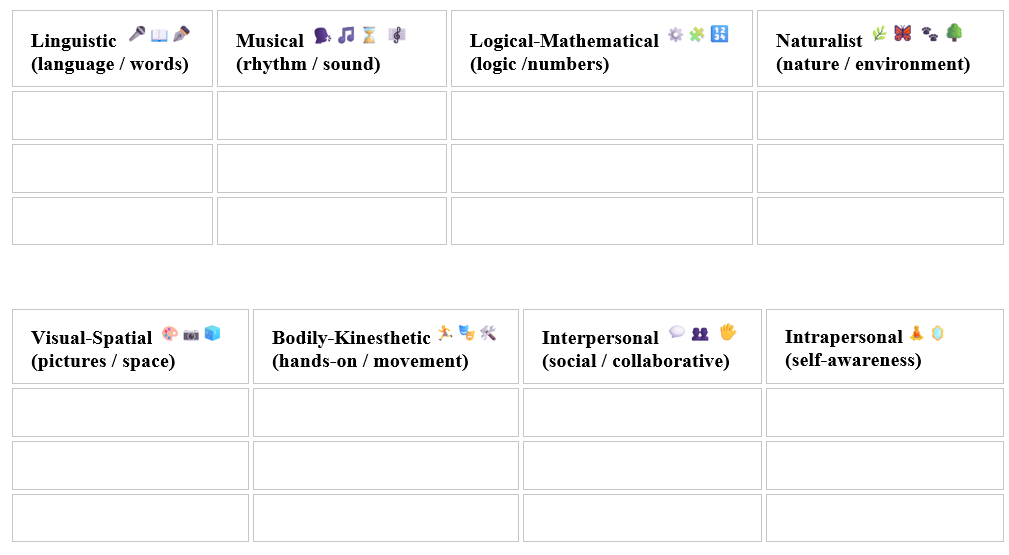
III. Engage students in a discussion about things they do to overcome learning obstacles. Have students write their answers on sticky notes or small pieces of paper. Ask them, “Think back to times when you got stuck learning something but figured it out. What did you do to get unstuck?”

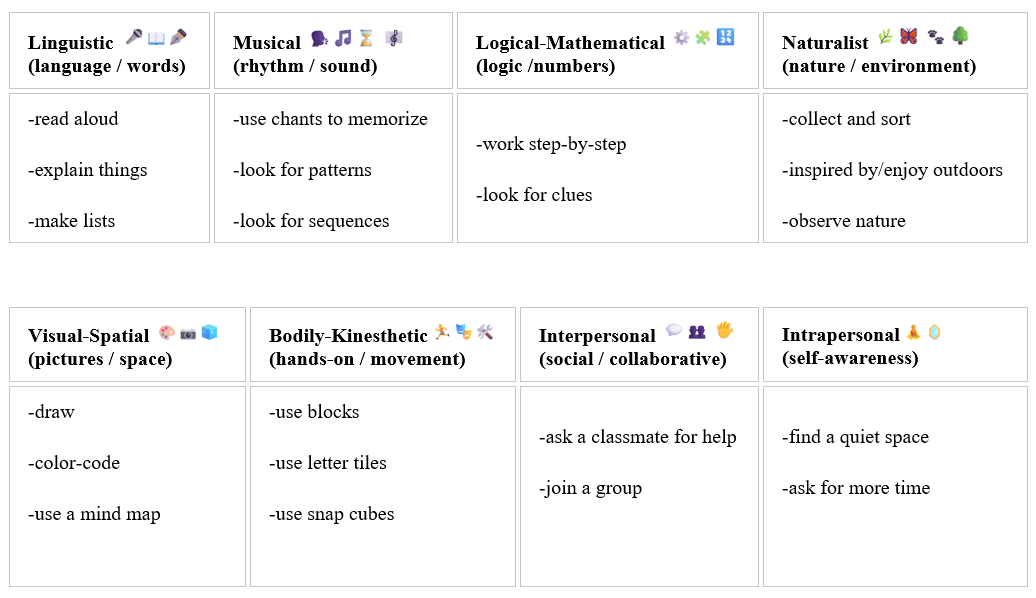
Examples may include:

  • draw or look for graphs or pictures
  • use manipulatives like blocks, tiles
  • ask a classmate for help
  • look for quiet, ask for more time
  • work step-by-step
  • look for clues to make predictions
  • read aloud
  • observe nature
  • color code text
  • look for patterns or sequences
  • make lists
  • collect and sort

IV. Guide students in thinking about which of the Multiple Intelligences categories best describe each of their personal experiences. Instruct them to record their answers and reasoning in the chart. Explain that some actions or activities engage more than one category, but have them choose the primary intelligence.

For example:
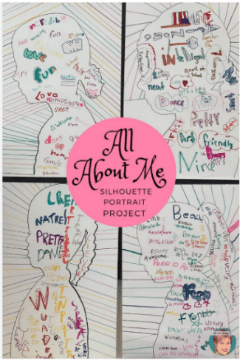
IV. Have each student draw a profile silhouette. Jenny K has tips on how-to outline one.
a. Tape a piece of 12 x18 light-colored paper to the wall at the student’s eye level.

b. Have each student sit in a chair with the side of their head right next to the paper.

c. Shine a flashlight or projector at the student’s profile from about 3 to 4 feet away to create a sharp shadow on the paper. Trace the outline.

V. Design the profile silhouettes.

a) Ask students to refer to the Multiple Intelligences chart to help them answer the question, “What smart ways does your brain work to make you, YOU?”

b) And have them fill in their silhouettes with words and pictures to show their unique strengths, including interests and activities they enjoy both inside and outside of school.

c) Ask students to make a pledge:

Next time I get stuck ______________, I will _______________.

I hope designing their own profile silhouettes helps kids discover all the smart ways they use their brains! I’d love to see some profile silhouettes. Please reach out to me via my website, or tag me on Facebook, Instagram, or Bluesky if you share their work!

Recommended reading:

Multiple Intelligences Theory: Widely Used, Yet Misunderstood by Youki Terada (Edutopia)

Multiple Intelligence Theory and Growth Mindset by Laura Candler

Check out the No Brain the Same book page for more content.

Edited by Lindsay H. Metcalf, Keila V. Dawson, and Jeanette Bradley;
Illustrated by Jeanette Bradley
Charlesbridge | ISBN: 978-1-62354-583-3

Purchase wherever books are sold!

AmazonBarnes & NobleBooks A MillionBookshop.orgHudson Booksellers Powell’s  | TargetWalmart

Author visits, Picture books, Teaching Tips, Writing Craft

Activity: No Brain the Same at ALAAC26!

We passed a good time at the American Library Association Annual Conference. It’s always great to connect with other writers, educators, and librarians in-person. Book people are the best people! I made a short video re-cap below.

And will also share an activity Jeanette Bradley, co-editor and illustrator of No Brain the Same: Neurodivergent Young People Shaping Our World created for the conference. If you ever have a chance to attend this conference, I highly recommend it!

No Brain Like Mine art activity printable (click here or image to open pdf)

No Brain Like Mine art activity instructions (click here or image to open pdf)

Author visits, Picture books, Teaching Tips

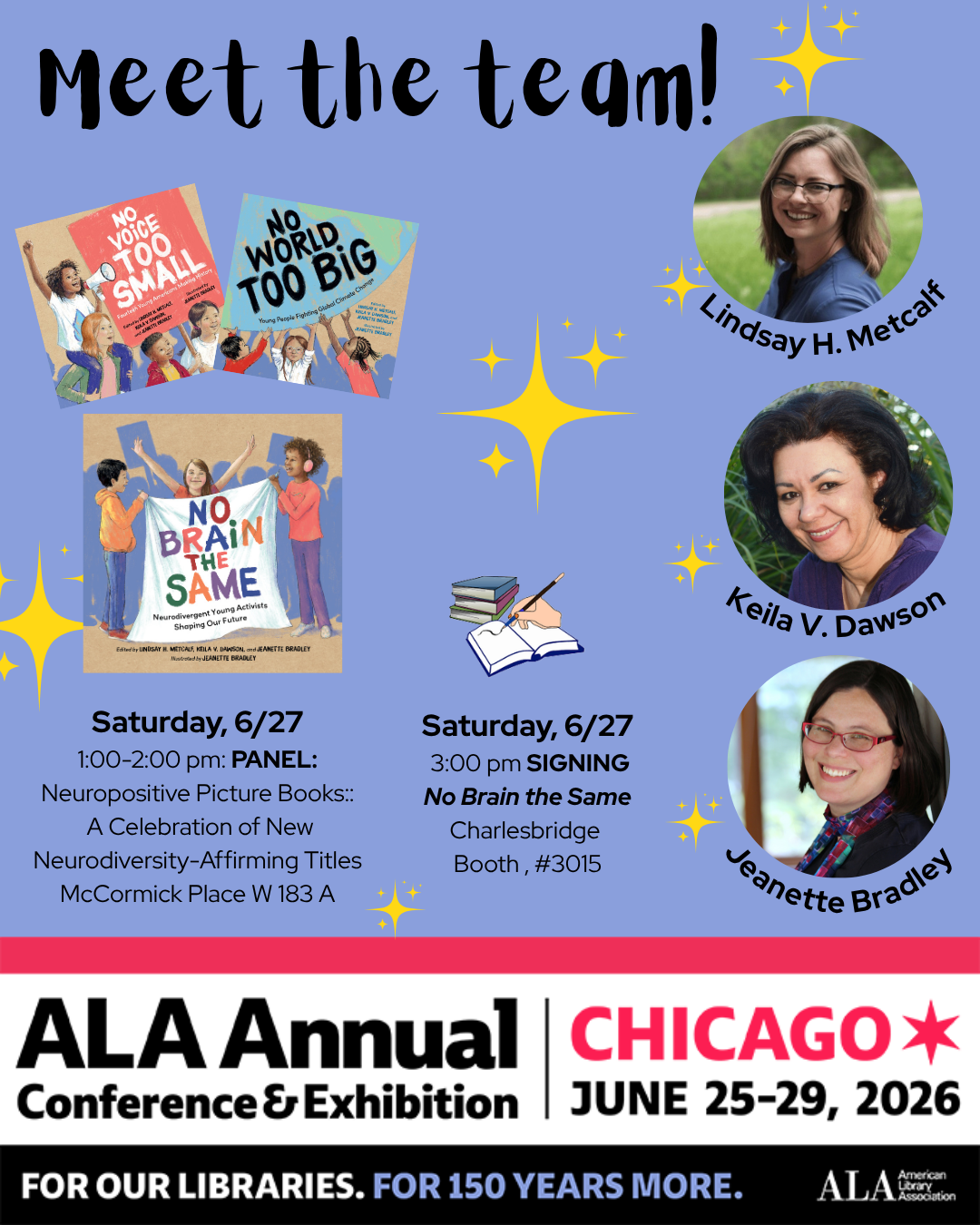
Meet the NO BRAIN THE SAME team at ALA 26!

We’re presenting on Saturday, 6/27 from 1-2 pm, McCormick Place, W 183 A and signing copies of No Brain the Same at 3 pm at the Charlesbridge Booth #3015.

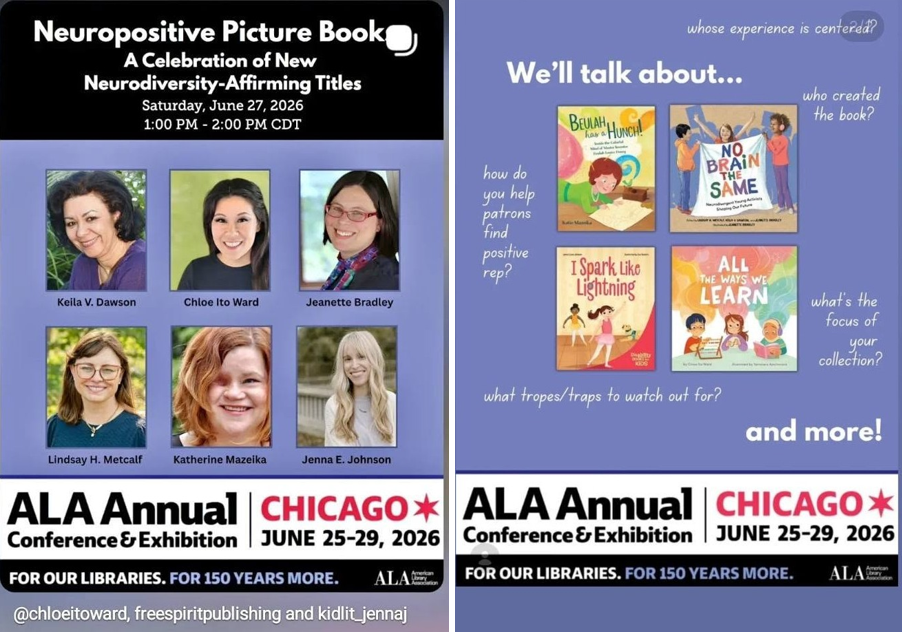
Fellow panelist Chloe Ito Ward shared this about our session Neuropositive Picture Books: A Celebration of New Neurodiversity-Affirming Titles:

Are you looking for tools to help children, families, and classrooms understand and celebrate neurodivergence?

Come away from this session with a deeper understanding of how to support neurodivergent children and their schools and families with the power of picture books, along with a curated list of new neurodiversity-affirming titles to strengthen your collection.

Activism, Diverse Books, Nonfiction, Picture books, Teaching Tips, Uncategorized

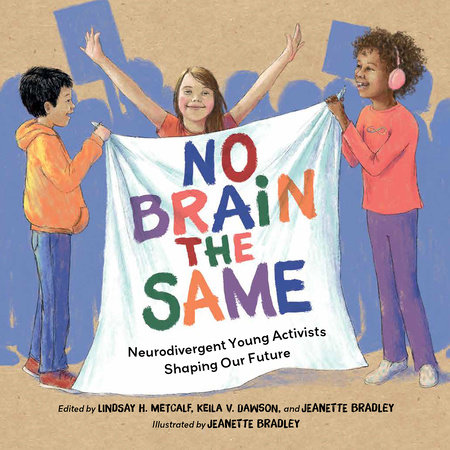
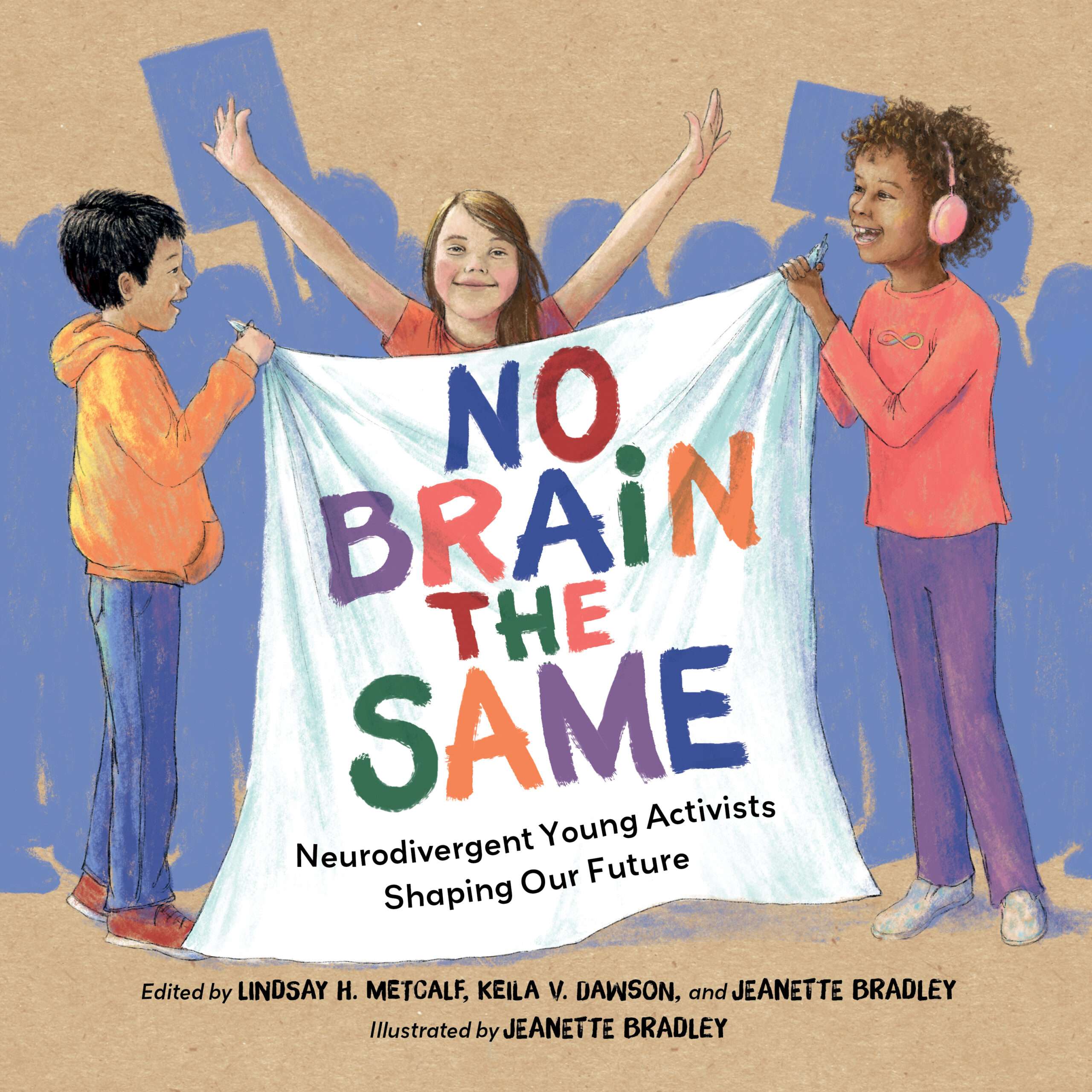
No Brain the Same coming June 2

Through powerful poems, this book honors neurodivergent youth activists transforming their communities and invites kids to act—continuing the spirit of No Voice Too Small  and No World Too Big.

Featuring Billie Eilish, Dara McAnulty, and Ly Xīnzhèn M. Zhǎngsūn, these fourteen poems spotlight neurodivergent activists inspiring kids ages 5 to 9 to make change. These fourteen neurodivergent activists began their work when they were young and continue it now, changing systems, politics, policies, and more. The book features poems written by poets who have something in common with each activist.

These fourteen neurodivergent activists began their work when they were young and continue it now, changing systems, politics, policies, and more. The book features poems written by poets who have something in common with each activist.

Fourteen poems by CooXooEii Black, Vanessa Brantley-Newton, e.E. Charlton-Trujillo, Liv Mammone, Lyn Miller-Lachmann, K. A. Reynolds, and others honor activists from all over the world and the United States. Additional text goes into detail about each activist’s life and how readers can get involved.

Activists introduced:

  • Connor DeWolfe, featured in a poem by e.E. Charlton-Trujilo
  • Helena Donato-Sapp by Vanessa Brantley-Newton
  • Billie Eilish by Devin Murphy
  • Mia Armstrong by Fiona Morris
  • Sadie McCallum by Liv Mammone
  • Adam Wolfond by Hannah Emerson
  • Liam Garner by Jen Malia
  • Ly Xīnzhèn M. Zhǎngsūn Brown by A. J. Sass
  • Jazmine Wildcat by CooXooIee Black
  • Andy Smith by Lyn Miller-Lachmann
  • Molly Seidel by Jeanette Bradley
  • Dara McAnulty by Sally J. Pla
  • Mollie Davis by Jordan Scott
  • Cillian O’Conner by K. A. Reynolds

Edited by Lindsay H. Metcalf, Keila V. Dawson, and Jeanette Bradley;
Illustrated by Jeanette Bradley
Charlesbridge | ISBN: 978-1-62354-583-3

40 pages | Ages 5-9

No Brain the Same, coming June 2, 2026!

Pre-order from:

Bookshop |  AmazonBarnes and Noble  Hudson Booksellers  | Books A Million | Target

Nonfiction, Picture books, Teaching Tips

OPENING THE ROAD is a Notable Book!

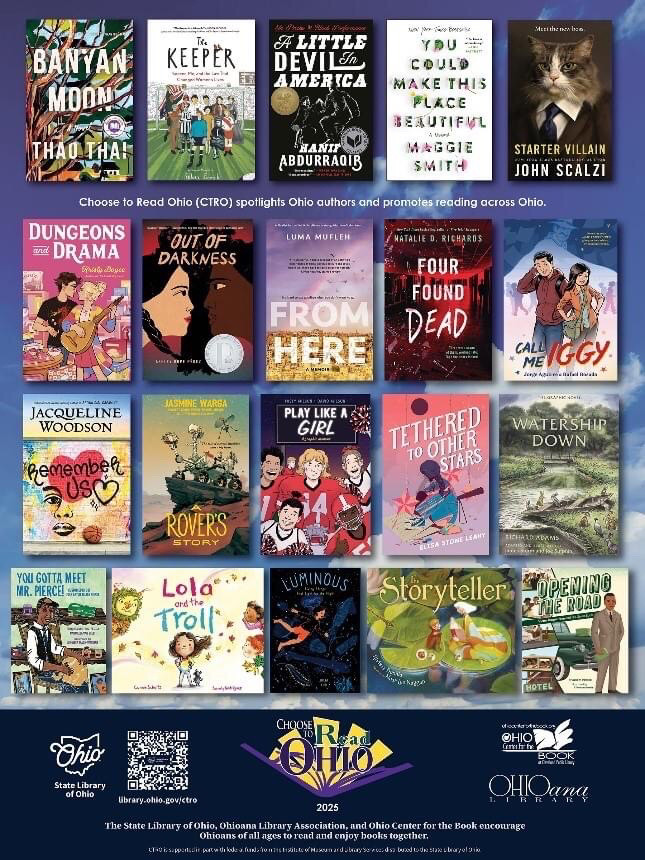
I am thrilled to announce that The State Library of Ohio, the Ohioana Library Association with the Ohio Center for the Book and Choose to Read Ohio Advisory Council selected OPENING THE ROAD: VICTOR HUGO GREEN AND HIS GREEN BOOK as a 2025 Choose to Read Ohio (CTRO) notable book! Find the reader’s toolkit created for OPENING THE ROAD here.

The CTRO booklist features 20 titles for all ages selected by Ohio teachers, librarians, and other advocates for readers and reading.

Nonfiction, Picture books, Teaching Tips

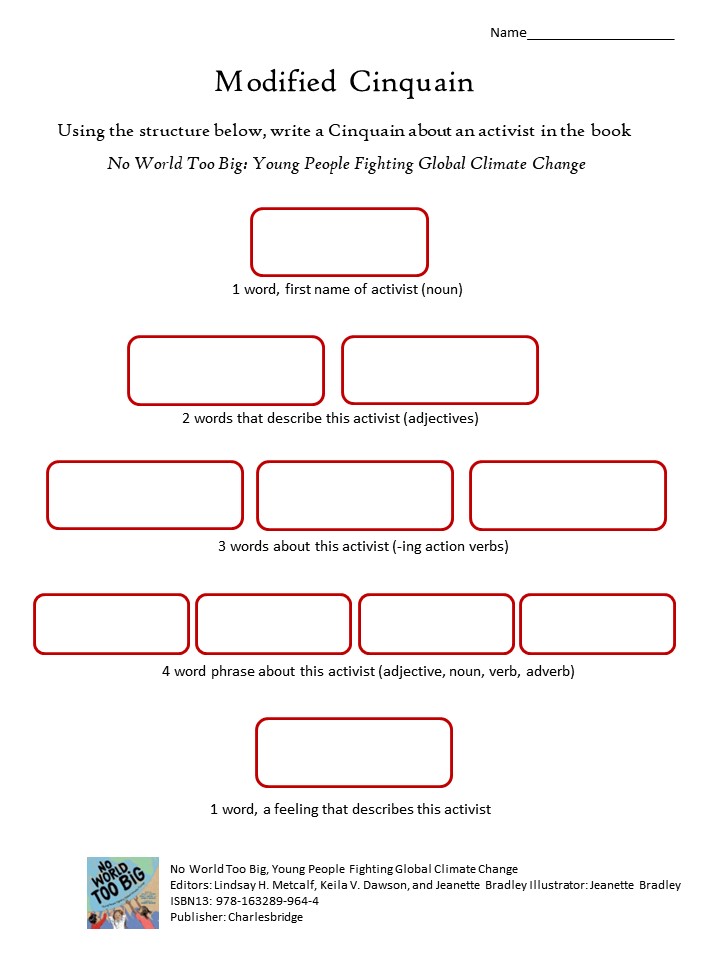
A Poetry & Earth Month Mentor Text Activity

April is poetry month and Earth Day is celebrated every April 22nd. But do you know about the Earth Month Ecochallenge? It runs from April 1 – April 30, 2024. This month, pledge to take action. The more who do, the greater the impact. From their website, “This year’s theme, “Conserving Every Ecosystem, Caring for Every Creature,” highlights the intersection of conservation and behavior change. By focusing on daily actions and continuous learning, we aim to create a sustainable and just world, not just for humans but for all species and ecosystems we rely on.”

Below is an activity for kids using NO WORLD TOO BIG, a perfect fit for April’s Poetry Month, the Earth Month Ecochallenge, and Earth Day on April 22nd. Click here or on the worksheet to download the template.

Every day is Earth Day!

Diverse Books, Teaching Tips, Writing Craft

Kidlit For Growing Minds October News

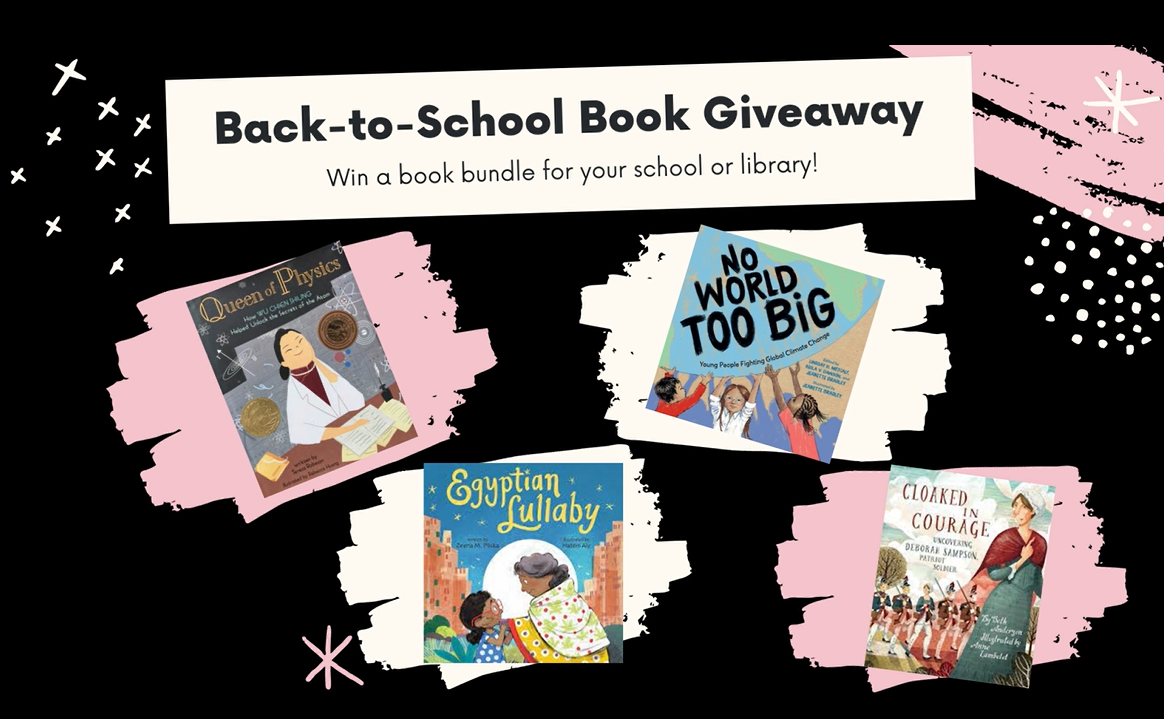
The October Substack newsletter is live! Teachers and librarians will find news you can use. And there’s another educator Book Bundle giveaway for subscribers.

October: Smells like pumpkin spice and book challenges

Bookish news, giveaways, a profile of Nancy Churnin, and new mini lesson on sensory language!

We are a group of children’s book creatives who write nonfiction and informational fiction books who are also dedicated to supporting teachers, librarians, and students to help them discover ways to use our books with students.

Also follow us on Twitter/X @ForGrowingMinds.

Diverse Books, Teaching Tips, Writing Craft

Introducing Kidlit For Growing Minds News!

EXTRA! EXTRA! Read All About It! I belong to a group of children’s book creatives who write nonfiction and informational fiction books. We are also dedicated to supporting teachers, librarians, and students to help them discover ways to use our books with students.

We’re publishing a newsletter on Substack! And each month we will share news and teaching tips.

Read our first post written by moi and subscribe to win a Back-to-School book bundle to support a school of your choice! And please share with others.

Also follow us on Twitter/X @ForGrowingMinds.